

You're three hours into your day, rushing between class and practice, and you realize you haven't eaten since breakfast. Your afternoon training session is in an hour, and you're already running on empty. Sound familiar?
For athletes managing demanding training schedules alongside work, school, or other commitments, underfueling isn't just common—it's the number one performance killer during intense training blocks and competitive seasons.
The problem isn't that you don't know you should eat. It's that your schedule feels impossible to navigate, perfection seems like the only acceptable standard, and when you fall short, the whole system falls apart.
Here's the reality: in-season nutrition doesn't require perfection. It requires systems that work when motivation fails and chaos hits.
Why Underfueling Happens to Busy Athletes
When your training volume increases and your schedule gets compressed, something has to give. Too often, that something is your fueling strategy.
The challenge compounds quickly. Longer training sessions burn more energy. More competitions mean more travel and disrupted routines. Add academic or work commitments, and you're left with less time to prepare food and fewer opportunities to actually eat it.
This creates a dangerous cycle: you skip a meal because you're busy, your energy drops in training, your mental sharpness decreases in meetings or classes, your recovery suffers, and tomorrow you're starting from an even bigger deficit.
The consequences show up everywhere. In the weight room, you can't hit the same intensity. In competition, you fade in the final quarter. In the classroom or office, that brain fog makes everything take twice as long—which means you stay up later, sleep less, and wake up even more depleted.

The Real Solution: Building Chaos-Proof Fueling Systems
The answer isn't meal perfection. It's creating default systems that protect your performance when life gets overwhelming.
Think about it this way: motivation is unreliable. It comes and goes based on how tired you are, how stressed you feel, how much else is demanding your attention. But systems? Systems run on autopilot. They're your safety net when you're too exhausted to think clearly.
The Foundation: Regular Fueling Windows
Your body needs consistent energy input to match the consistent demands you're placing on it. The goal is simple: eat something every three to four hours.
This isn't about elaborate meals. It's about creating regular opportunities to refuel before you hit empty. When you space your eating throughout the day, you avoid the common trap of trying to make up for hours of undereating in one or two massive meals.
A basic framework looks like this: breakfast around 7 AM, a mid-morning snack around 10 AM, lunch around 1 PM, an afternoon snack around 4 PM, dinner around 7 PM, and if your schedule demands it, something light before bed.
Does this need to be exact? Absolutely not. But the principle matters: consistent fueling prevents the performance drop that comes from running on fumes.
Building Meals Without Overthinking
When time is limited and decisions feel overwhelming, simplify your approach to meal construction.
Every meal needs three components: a protein source, a carbohydrate source, and colorful produce (fruits or vegetables). That's it. No complicated macros to calculate in the moment, no perfect portions to measure out. Just those three elements on your plate.
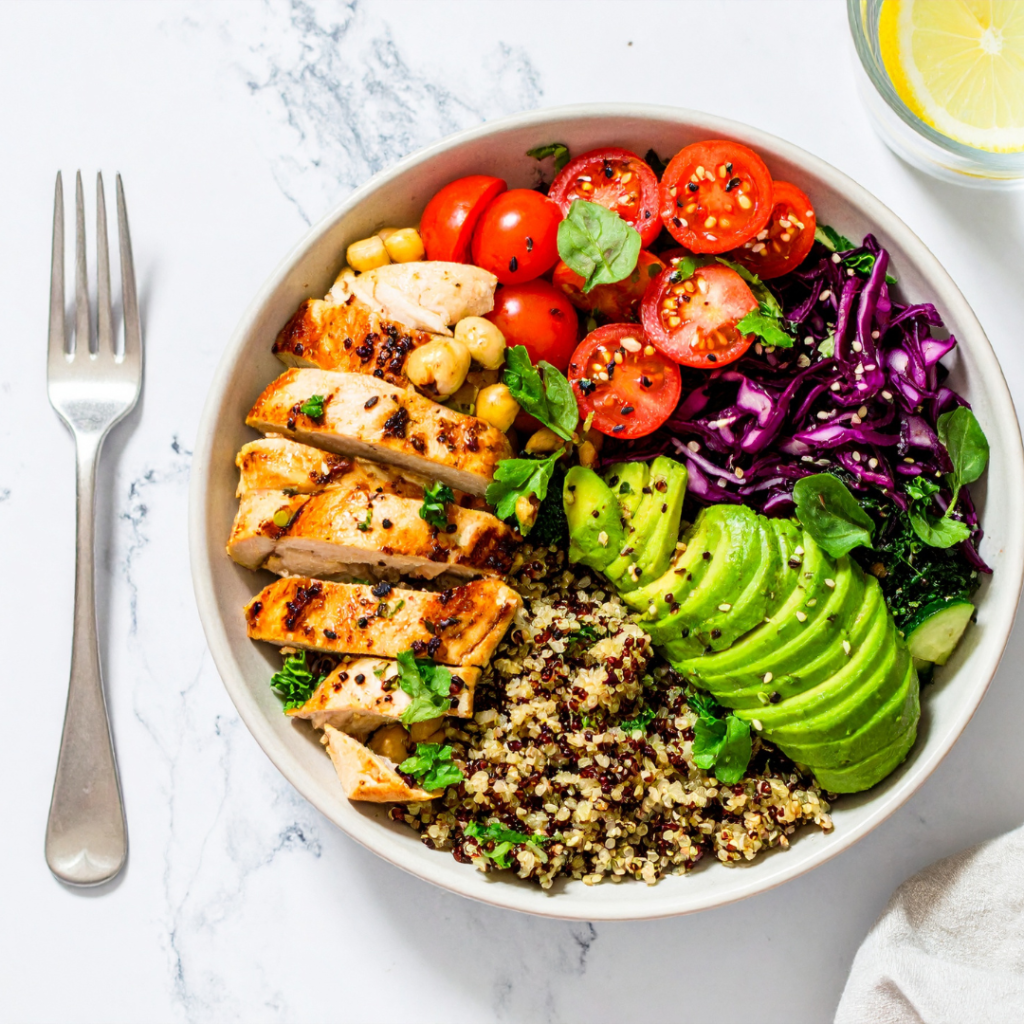
A turkey sandwich with an apple and carrot sticks checks every box. Greek yogurt with granola and berries works perfectly. Chicken, rice, and broccoli is the classic for good reason. These aren't fancy, but they're effective—and effectiveness beats perfection every time.
For snacks, pare it down even further: grab a protein source and combine it with carbohydrates or produce. A protein bar with a banana. String cheese with trail mix. Beef jerky with an apple. Keep it simple enough that you can execute it when you're exhausted.
The Recovery Window You're Probably Missing
After training sessions and competitions, your body is primed to absorb nutrients and begin the recovery process. This is one of the most valuable fueling windows you have—and it's frequently skipped.
The reason is simple: you're tired, sweaty, and ready to move on to the next thing. But if you wait until you get home, shower, and finally think about food, you've missed the optimal window when your muscles are like sponges, ready to take up the nutrients you provide.
The solution is planning ahead. Pack something you can consume immediately post-training. A protein shake and a granola bar. Greek yogurt with fruit. A simple turkey wrap. Nothing elaborate—just something you can eat in the locker room or on the ride home.
This serves two critical purposes: it jumpstarts recovery so you're ready to train hard again tomorrow, and it provides calories when your body is actively asking for them, helping you meet your total daily energy needs.
Strategic Hydration for Busy Schedules
Hydration suffers for the same reason meals get skipped: when you're mentally occupied with everything else, you simply don't notice thirst until it's already impacting performance.
Dehydration doesn't just make you thirsty. It increases your heart rate, reduces your power output, impairs your decision-making, and significantly raises your injury risk during training. Even mild dehydration—the kind you might not consciously notice—can drop your performance.
The fix is tying hydration to existing habits rather than relying on remembering to drink water. Start your day with two cups of fluid at breakfast. Have at least one cup with every meal and snack. Keep a water bottle visible during training. Replace fluids after each session based on what you lost in sweat.
A practical guideline: aim for roughly half your body weight in pounds converted to fluid ounces per day as a baseline. A 160-pound athlete should target at least 80 ounces of fluid daily, with additional intake based on sweat losses during training.
Creating Your Environment for Success
Here's where most fueling strategies fall apart: they rely on making good decisions in the moment when you're tired, stressed, and short on time.
Better approach? Set up your environment so the good decision is the easiest decision.
Stock your key locations. Your locker, your car, your bag, your desk—anywhere you consistently find yourself needing food should have shelf-stable options ready. Protein bars, trail mix, individual nut butter packets, dried fruit, jerky. When hunger hits and you're between commitments, you have something immediately available instead of being at the mercy of whatever vending machine or convenience store is nearby.
Prep in batches when time allows. Dedicate one block of time—usually on a weekend—to prepare base ingredients that you can mix and match throughout the week. Grill several chicken breasts. Roast a big batch of vegetables. Cook a pot of rice or quinoa. Store them separately so you can combine them into wraps, bowls, salads, or side dishes based on what sounds good each day.
Use your freezer strategically. Frozen pre-cooked protein, steamable vegetables, and microwavable grains can be your emergency backup meal. When you didn't meal prep, when practice ran late, when everything went sideways—you can still assemble a complete meal in under five minutes.
Adjusting Intake Based on Training Demands
Not every day requires the same fueling approach. Your nutrition should flex with your training load.
On high-intensity training days—your hardest practices, your competition days—carbohydrates become the priority. Your body burns through carbs when you're working at high intensity, so you need them available going into the session and you need to replenish them afterward. Think oatmeal with fruit before training, a bagel with your recovery shake after, pasta with chicken and vegetables at dinner.
On moderate training days, aim for balanced meals that include all components without overemphasizing any single one. Protein, carbs, and produce all show up in appropriate amounts. You're maintaining energy stores without overshooting what your body actually needs.
On light or rest days, dial back the carbohydrates slightly since you're not burning through as much energy. Emphasize protein to support recovery, include plenty of fruits and vegetables for nutrients and recovery compounds, and don't stress about loading up on carbs when your body isn't demanding them.

The Budget-Friendly Approach
Fueling performance doesn't require expensive supplements or premium meal delivery services.
Buy shelf-stable items in bulk: oats, rice, quinoa, beans, nuts, seeds. These cost significantly less per serving when purchased in larger quantities, and they last for months in your pantry.
Choose versatile ingredients that work across multiple meals. Eggs can be breakfast, a quick snack, or added to a salad. Potatoes can be microwaved as a pre-workout snack, included in a bowl with other ingredients, or served as a simple side. Spinach works in salads when fresh, then gets tossed in the freezer when it starts to wilt and becomes your smoothie ingredient.
Make your own portable snacks instead of buying packaged versions. Trail mix costs a fraction of the price when you combine your own cereal, nuts, dried fruit, and chocolate chips compared to buying pre-made versions. Energy balls made from oats, nut butter, and honey are cheaper and more customizable than store-bought energy bites.
Practical Solutions to Common Challenges
"My game doesn't end until late at night—should I still eat?"
Yes. Your body needs to begin recovery regardless of the time. You'll be more sore and recover slower if you wait until morning. Eat something even if it's simple: a protein shake, a sandwich, Greek yogurt with fruit. Prioritize recovery over arbitrary rules about eating late.
"There's only fast food available after games."
Make the best choice from what's available. Grilled chicken options are typically better than fried. Add a side salad or fruit cup if possible. Get some carbohydrates that aren't solely fried. It's not perfect, but eating something is better than eating nothing—and tomorrow you can course-correct with better options.
"I crash during afternoon training."
Check two things: Are you eating enough throughout the entire day leading up to practice, or are you trying to fuel a 4 PM session on just breakfast? Second, are you properly hydrated all day, or are you trying to chug water in the hour before training? Both underfueling and dehydration will cause that crash. Address them earlier in the day rather than trying to fix them right before you train.
Starting Your Chaos-Proof System
You don't need to implement everything simultaneously. Start with the lowest-hanging fruit—the one change that will have the biggest impact for your specific situation.
Maybe that's committing to one post-training recovery snack every day. Maybe it's stocking your locker with shelf-stable options so you always have something available. Maybe it's batch cooking two meals every weekend to set yourself up for success during the week. Maybe it's simply drinking water with every meal to establish that hydration baseline.
Pick one, build consistency with it until it becomes automatic, then add the next piece.
The goal isn't perfection. It's building a system robust enough to keep you fueled even when your schedule is absolute chaos—because that's exactly when your performance depends on it most.

Ready to Take Your Nutrition
to the Next Level?
Stop guessing and start getting results. Book a free discovery call
to find the right coaching program for your goals.