
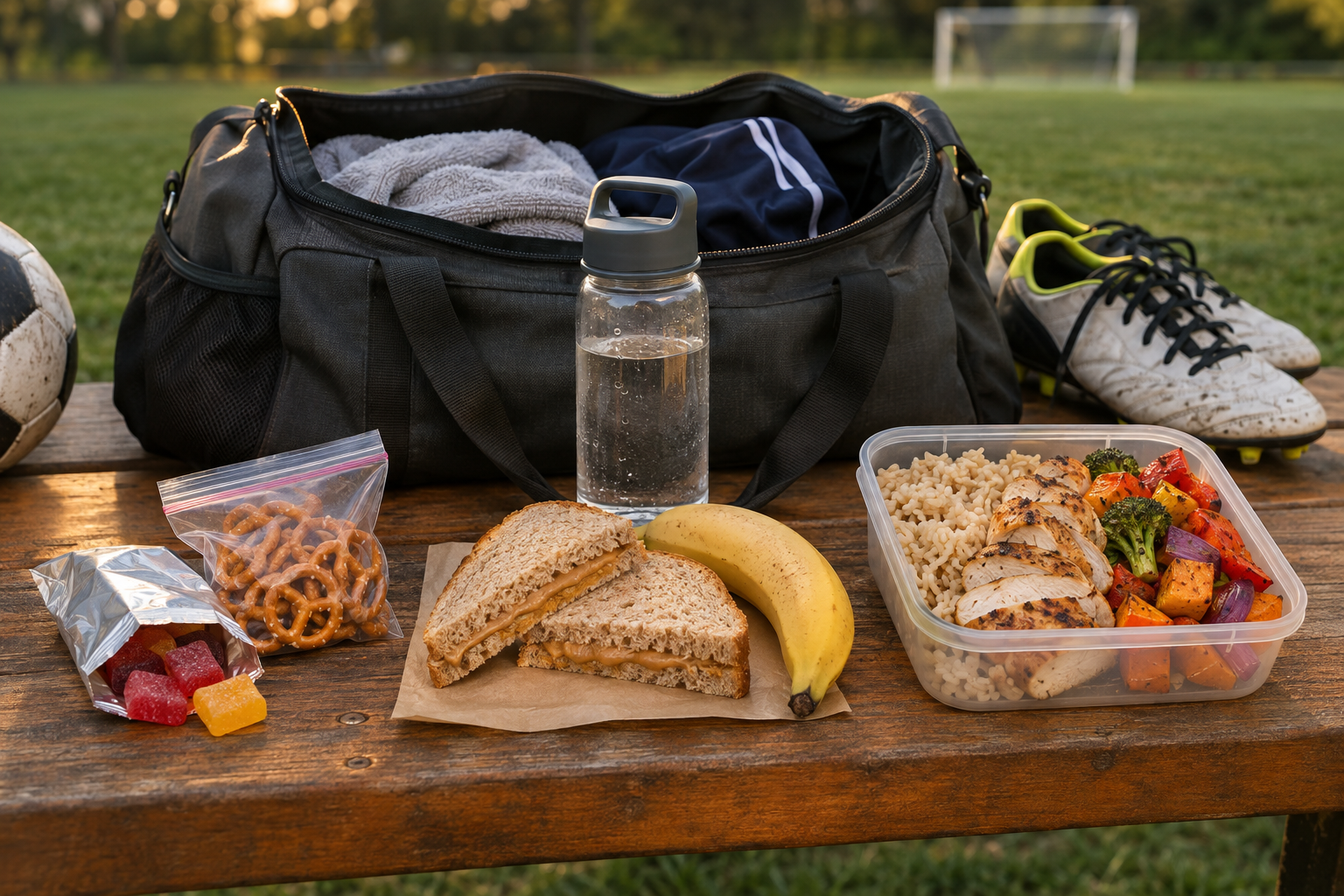
"Cut out ultra-processed food" is the advice that travels fastest, and it was written for the general public. Athletes are asking their bodies to do something very different, and the quick fuel soccer players carry to training is ultra-processed on purpose.
Ultra-processed food isn't bad for athletes as a blanket rule. Around training, quick, easy-to-digest fuel is doing a job. Away from training, build on whole foods, eat enough for the work you're doing, and if you cut something, replace it.
What Does "Ultra-Processed" Actually Mean?
Depending on who you ask it can mean something different to everyone. In general, it's a label for how a food is made and what's on its ingredient list, not a measure of nutrition. One widely used description calls a food ultra-processed when its ingredients include things you'd rarely use in a home kitchen, or additives used to make it more appealing [1].
That makes for some strange lines. Store bread made from flour, water, salt and yeast counts as "processed." Add one emulsifier, an ingredient that keeps things mixed, and the same bread becomes "ultra-processed" [1]. Plain oats work the same way: add sugar and they move up a group, add flavors and they move up again [1].
Experts don't sort foods the same way, either. When food and nutrition specialists sorted the same list of foods, they often put them in different groups, and bread and yogurt split them the most [2]. Trained coders working from the same rules didn't always match either [3].
When experts sort the same foods differently, the label alone is a shaky thing to plan your fueling around. It tells you how something was made but you still have to decide what it's used for.
Are Sports Drinks, Gels and Bars Ultra-Processed?
Yes, nearly all of them. Sports nutrition researchers classify sports drinks, gels, chews and sports bars as ultra-processed, because they're made that way on purpose [4].
The headlines rarely mention this part. A recent review looked for published studies showing if ultra-processed food or sports foods cause health problems in athletes, and didn't find any [4]. That isn't proof they're safe. It means almost nobody has looked.
There's also a gap between what athletes believe and what they do. Many college athletes in one small study said processed food was less healthy, then grabbed the bars and chews at their fueling stations anyway [5]. The researchers thought it may be because their sports dietitian had put those foods there for a reason [5].
Same food. The athletes just knew what it was there to do.
Why Do People Overeat Ultra-Processed Food?
In adults who weren't athletes, the strongest lead so far is speed, and how much energy is packed into each bite.
Adults who weren't athletes ate more over two weeks on an ultra-processed diet than on an unprocessed one, and they ate it faster [6]. That study wasn't built to find out why, and the ultra-processed meals weren't rated as tasting any better [6]. So "it just tastes better" isn't the obvious answer.
In follow-up studies, also in adults who weren't athletes, slowing the eating down with firmer textures meant people ate noticeably less, even when the food was ultra-processed [7][8]. Speed and energy packed into each bite seem to matter more than the label alone.
Now flip that to your world. Connecting this to training fuel is my reasoning, not something these studies tested: on the couch, food that goes down fast is easy to overdo. Around training, quick and easy to eat is exactly the job.
Why Fast Fuel Belongs Around Training
Around a session, you want energy your body can use right away. That's why I lean on quick options around training and games: sports drinks, gels, chews, even animal crackers or Skittles. Quick energy in, used right then. And for clarification, I'm not saying you should have candy all-day everyday! Nice try.
Whole foods with fiber and fat take longer to digest, and when you've got 30 seconds on the bench before going into the game, that matters. Away from training, you don't need that quick hit, which is why I'm fully behind whole foods first the rest of the day, as long as you're eating enough overall for what you need.
The sports nutrition world hardly uses the word "processed"; it judges these foods by their job. It describes sports foods as a convenient, though usually more expensive, option when everyday food isn't practical. This is why athletes can choose easy-to-eat, low-fiber carbs to hit their fuel and keep their stomach comfortable [9][10].
Worth remembering: everybody's stomach is different, and you know yours best. Practice your fuel in training. No new foods on game days.
What Happens When Athletes Cut Processed Food All at Once?
Usually, they end up eating less overall without meaning to, at least at first. What I see when an athlete says they're cutting processed food is that they go all in, cut everything at once, and don't line up anything to replace it. Snacks usually being the first thing to go.
Training fuel can go as a result too. Athletes try to get through sessions on very little, and even stop drinking sports drinks too, so unless they're paying attention to their water intake they can end up under-hydrated as well. The work stays the same, with less going in. What could go wrong right?
So if you're cleaning up how you eat, make sure to keep the total amount in check. And if cutting foods has started to feel like it's taking over, that's worth talking to someone about.
Is Any Ultra-Processed Food Worth Limiting?
Yes, and that's where the research gets more useful than the label. When long-term studies of adults split ultra-processed food into its parts, the higher heart disease risk sat mostly with sugary drinks and processed meats, while ultra-processed bread, cold cereal, yogurt and savory snacks didn't follow that pattern [12].
In a newer, large study of older US adults, total ultra-processed intake wasn't linked with colorectal cancer, bread and breakfast cereal were linked with lower risk, and processed meat was linked with higher risk [13]. Again, the type of food mattered more than the label.
Two cautions travel with all of this. These are observation studies in adults, so they show links, not cause. And across the whole field, most of this evidence is rated weak [14].
The takeaway: lumping it all together hides more than it shows. If you want somewhere to start, sugary drinks sipped through the day and processed meats are the ones to keep in check. Sports drinks and gels have their job around the session.
How to Sort Your Food by the Job It Does
This is the part to actually use. The better question is "when am I eating it, and what's it for?" That one question sorts most of your bag.
Right before and during training or games: quick fuel.
- Sports drinks
- Gels and chews
- Animal crackers or even plain candy
These are built to go down fast. Keep them for the session.
Right after, when dinner is hours away: something now.
- A protein bar
- A wrap or sandwich
- Whatever you'll actually eat on the way home
What I tell my athletes: a bar right after training helps you reach your protein for the day and supports recovery, especially when the alternative is nothing until dinner about three hours later.
The rest of the day: whole foods first.
- Meals built on whole foods
- Snacks between meals that keep your energy up
- Enough on the plate to match the training you're doing
Sports products have a time and a place. They're built for around training and competition, not all day, every day. Timing is the part to be mindful of.
If you want to clean things up, swap instead of dropping.
1. Pick one meal or snack away from training to change first.
2. Decide what replaces it before it leaves. Same job, same time of day, about the same amount.
3. Leave your session fuel alone. It has a job.
One change at a time. You're not blowing everything up and starting from scratch.
Where to Start This Week
Try these two this week:
1. Dump your bag out and sort it into three piles: before and during, right after, and everything else.
2. Before you cut anything, name its replacement. It should cover the same moment in your day.
Soccer leads the examples here, but the same sort works for a hockey shift, a volleyball timeout, a swim meet, a track day or a basketball practice. Whatever your sport, the bag still has three jobs, and you're already doing the hard part.
-----------
Frequently Asked Questions
Is ultra-processed food bad for athletes?
Not as a blanket rule. No published study has shown that ultra-processed food or sports foods cause health problems in athletes, though that's because almost nobody has looked [4]. That isn't proof it's safe. Around training, quick sports fuel does a job, and the rest of the day goes best on whole foods, with enough to match your training.
Are protein bars and sports drinks bad for you?
They're tools with a time and a place. Sports drinks, gels and chews belong around training and games, not sipped all day. A bar is useful right after training when dinner is hours away. It's not intended to replace a meal but can help ensure hitting your total daily protein goals.
Is ultra-processed food addictive?
That idea comes mostly from questionnaires where people describe how they feel about certain foods, and even the researchers making the case say it isn't an official diagnosis [15]. What controlled studies do show is that food that goes down fast is easy to overeat, in adults who weren't athletes [7][8].
Doesn't the government say to avoid processed food?
The 2025 to 2030 US dietary guidelines tell teens to avoid "highly processed" foods, but they don't define the term and don't mention athletes or sports drinks [16]. The same guidelines say very active people may need more sodium to replace what they sweat out [16]. Advice written for everyone has to be translated for someone training twice a day.
Can a sports dietitian help me clean up my eating without under-fueling?
Yes. Rise Nutrition works virtually with competitive athletes in soccer and every other sport. A free 15-minute Discovery Call is a chance to tell me what you're eating now and what you want to change, and we'll see how we could work on it together.
-----------
If you've been cutting processed food and training has started to feel harder, book a free 15-minute Discovery Call to tell me what's going on and talk through how we could solve it together. Book Your Discovery Call
Jay Short, MS, RD, CSSD is a Registered Dietitian and Board Certified Specialist in Sports Dietetics, and co-owner of Rise Nutrition, specializing in sports dietetics for competitive athletes. He works with US Soccer (all 27 teams), the Columbus Blue Jackets (NHL), and athletes across MLS, collegiate, and club programs.
-----------
References
1. Monteiro CA, Cannon G, Levy RB, et al. Ultra-processed foods: what they are and how to identify them. Public Health Nutrition, 2019. [https://pubmed.ncbi.nlm.nih.gov/30744710/](https://pubmed.ncbi.nlm.nih.gov/30744710/)
2. Braesco V, Souchon I, Sauvant P, Haurogné T, Maillot M, Féart C, Darmon N. Ultra-processed foods: how functional is the NOVA system? European Journal of Clinical Nutrition, 2022. [https://pubmed.ncbi.nlm.nih.gov/35314769/](https://pubmed.ncbi.nlm.nih.gov/35314769/)
3. Du S, Yang J, Sullivan VK, He JH, Fang M, Appel LJ, Rebholz CM. Comparison of food processing classification frameworks in the NHANES 2017-2018. American Journal of Clinical Nutrition, 2026. [https://pubmed.ncbi.nlm.nih.gov/41617090/](https://pubmed.ncbi.nlm.nih.gov/41617090/)
4. Forbes SF, Burke LM, Mantzioris E, Forsyth AK. Ultra-processed Foods and Athletes: Current Insights on Classification, Use, Awareness, and Impact-A Narrative Review. Sports Medicine Open, 2026. [https://pubmed.ncbi.nlm.nih.gov/42749886/](https://pubmed.ncbi.nlm.nih.gov/42749886/)
5. Eck KM, Byrd-Bredbenner C. Food Choice Decisions of Collegiate Division I Athletes: A Qualitative Exploratory Study. Nutrients, 2021. [https://pubmed.ncbi.nlm.nih.gov/34371832/](https://pubmed.ncbi.nlm.nih.gov/34371832/)
6. Hall KD, Ayuketah A, Brychta R, et al. Ultra-Processed Diets Cause Excess Calorie Intake and Weight Gain: An Inpatient Randomized Controlled Trial of Ad Libitum Food Intake. Cell Metabolism, 2019. [https://pubmed.ncbi.nlm.nih.gov/31105044/](https://pubmed.ncbi.nlm.nih.gov/31105044/)
7. Teo PS, Lim AJ, Goh AT, R J, Choy JYM, McCrickerd K, Forde CG. Texture-based differences in eating rate influence energy intake for minimally processed and ultra-processed meals. American Journal of Clinical Nutrition, 2022. [https://pubmed.ncbi.nlm.nih.gov/35285882/](https://pubmed.ncbi.nlm.nih.gov/35285882/)
8. Forde CG, Heuven LA, van Bruinessen M, Liu Z, Stieger M, de Graaf K, Lasschuijt MP. Eating rate has sustained effects on energy intake from ultraprocessed diets: a 2-week ad libitum dietary randomized controlled crossover trial. American Journal of Clinical Nutrition, 2026. [https://pubmed.ncbi.nlm.nih.gov/41314613/](https://pubmed.ncbi.nlm.nih.gov/41314613/)
9. Maughan RJ, Burke LM, Dvorak J, et al. IOC consensus statement: dietary supplements and the high-performance athlete. British Journal of Sports Medicine, 2018. [https://pubmed.ncbi.nlm.nih.gov/29540367/](https://pubmed.ncbi.nlm.nih.gov/29540367/)
10. Thomas DT, Erdman KA, Burke LM. Position of the Academy of Nutrition and Dietetics, Dietitians of Canada, and the American College of Sports Medicine: Nutrition and Athletic Performance. Journal of the Academy of Nutrition and Dietetics, 2016. [https://pubmed.ncbi.nlm.nih.gov/26920240/](https://pubmed.ncbi.nlm.nih.gov/26920240/)
11. Koivisto-Mørk AE, Paur I, Paulsen G, et al. Dietary Adjustments to Altitude Training in Elite Endurance Athletes; Impact of a Randomized Clinical Trial With Antioxidant-Rich Foods. Frontiers in Sports and Active Living, 2020. [https://pubmed.ncbi.nlm.nih.gov/33345095/](https://pubmed.ncbi.nlm.nih.gov/33345095/)
12. Mendoza K, Smith-Warner SA, Rossato SL, et al. Ultra-processed foods and cardiovascular disease: analysis of three large US prospective cohorts and a systematic review and meta-analysis of prospective cohort studies. Lancet Regional Health Americas, 2024. [https://pubmed.ncbi.nlm.nih.gov/39286398/](https://pubmed.ncbi.nlm.nih.gov/39286398/)
13. Abar L, O'Connell CP, Hong HG, et al. Associations of food processing and dietary risk factors with colorectal cancer incidence in the NIH-AARP Diet and Health Study: A cohort study. PLoS Medicine, 2026. [https://pubmed.ncbi.nlm.nih.gov/42879326/](https://pubmed.ncbi.nlm.nih.gov/42879326/)
14. Lane MM, Gamage E, Du S, et al. Ultra-processed food exposure and adverse health outcomes: umbrella review of epidemiological meta-analyses. BMJ, 2024. [https://pubmed.ncbi.nlm.nih.gov/38418082/](https://pubmed.ncbi.nlm.nih.gov/38418082/)
15. Gearhardt AN, et al. Social, clinical, and policy implications of ultra-processed food addiction. BMJ, 2023. [https://pubmed.ncbi.nlm.nih.gov/37813420/](https://pubmed.ncbi.nlm.nih.gov/37813420/)
16. US Department of Health and Human Services, US Department of Agriculture. Dietary Guidelines for Americans, 2025-2030. 2026. [https://cdn.realfood.gov/DGA_508.pdf](https://cdn.realfood.gov/DGA_508.pdf)

Ready to Take Your Nutrition
to the Next Level?
Stop guessing and start getting results. Book a free discovery call
to find the right coaching program for your goals.